


Palais Royal Sewing Box with Complete Gold-Mounted Etui
$3,500.00
1 Available
Rectangular Palais-Royal sewing box, veneered in a richly figured exotic wood, ascribed to Palais-Royal workshops, Paris, c.1830. The carcase presents a low, domed lid with a central blank rectangular cartouche and a steel swing handle set on two circular mounts; the base is raised on four turned steel ball feet. The front bears a small escutcheon and the hinged lid opens to reveal an interior mirror set within a woven trim above a fitted tray lined in pale velvet, cut to receive a full etui. The set visible in the images comprises scissors, needle case, stiletto, bodkin, thimble, a cut-crystal scent bottle and several floral pierced mother-of-pearl thread winders; many tools carry 18ct gold fittings and carved or turned mother-of-pearl handles.
Condition Report
Very good overall. The ensemble appears complete and original with the full fitted etui and associated tools present. One mother-of-pearl thread winder has a small chip, as noted by the curator. The interior mirror shows light wear to the silvering consistent with age and use, and the pale velvet lining has faint signs of handling where tools rested. Polished steel fittings — the handle and ball feet — show light surface marks consistent with use but no significant corrosion. Gold-mounted fittings and mother-of-pearl handles are intact; the pierced and engraved thread winders retain their detail. No major losses to the primary veneered carcase are evident from the supplied images.
Dimensions
Weight: 305gms, Length: 15cm, Width: 10.5cm, Height: 4.5cm.
A Sewing Etui for Personal and Travel Use
The form and contents indicate original use as a portable sewing etui for personal and domestic repair work. The fitted tray, cut to receive the full complement of tools, and the inclusion of a small cut-crystal scent bottle and mirror point to a dual function: practical needlework and a compact personal dressing set. The swing handle and compact proportions suggest the box was intended to be moved between rooms or carried during travel. The arrangement of tools within dedicated recesses shows it was designed for organised storage and ready access.
Transitional Palais-Royal Style (c.1830)
The design reflects early nineteenth-century Parisian taste around 1830. The use of richly figured exotic veneer set on a compact rectangular carcase, together with restrained decorative detail — a blank cartouche, minimal ornament on the mounts and turned steel ball feet — places the object in a transitional phase between late Empire and the more varied mid-century styles. Notably, the polished steel handle and feet align with documented fashion for steel furniture during the period around the July Revolution of 1830, when steel fittings were both fashionable and, in some contexts, politically resonant.
Construction: Exotic Veneer, Polished Steel and Mother-of-Pearl
The carcase is veneered in a richly figured exotic timber, worked to present continuous grain across lid and sides. The lid is hinged and fitted with a swing handle mounted on two circular steel bosses; the underside of the lid carries a mirror set within a woven trim. The interior tray is cut from a single fitted board and lined in pale velvet to hold the tools. The sewing implements are assembled from multiple materials: carved and turned mother-of-pearl handles, 18ct gold mounts and a cut-crystal bottle. The thimble shows fine engine-turning, and several winders display pierced and engraved decoration executed in mother-of-pearl.
Made in Palais-Royal, Paris
The object is attributed to Palais-Royal workshops or retailers in Paris, the location cited in the original description. Palais-Royal in the early nineteenth century was a cluster for retail outlets and small workshops specialising in luxury personal accessories and small domestic goods. Many such etuis were retailed without a named maker; attribution to Palais-Royal indicates a Parisian retail context rather than a single identifiable craftsman. The combination of 18ct gold fittings, mother-of-pearl elements and polished steel hardware is consistent with items produced for the Paris market at this period.
Collected by Connoisseurs of Palais-Royal Etuis
Collectors and institutions typically value examples where the set remains complete, the original mirror and fitted tray survive and the tools retain original mountings. This type of early-nineteenth-century French etui is of interest because it documents both material choices — mother-of-pearl, gold mounts, cut crystal — and domestic practice: the storage of personal sewing and dressing tools in a single portable case. Provenance linked to Palais-Royal retail contexts and evidence of original fittings increase appeal to those specialising in small 19th-century decorative and domestic objects.
Related products
-
Needle Holder
$0.00 -
Thimble and Scissors
$0.00 -
French Scissors
$0.00 -
Measuring Tape
$0.00 -
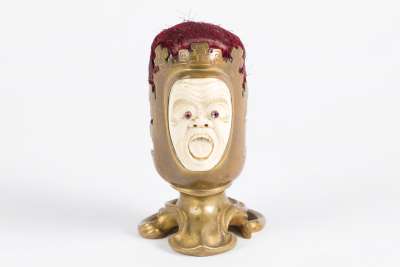
Pin Cushion
$0.00 -
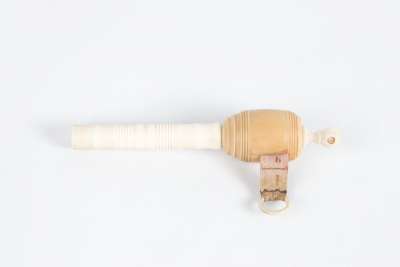
Tape Meassure
$0.00 -

Soldiers’ Sewing Kit
$0.00 -
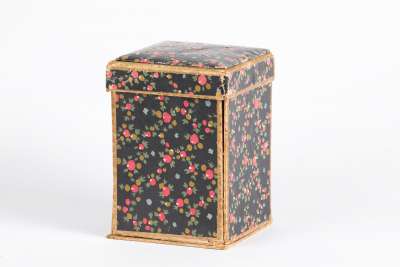
Alexandra Type Collapsible Needle Case, Early 20th Century Sewing Accessory
$0.00 -
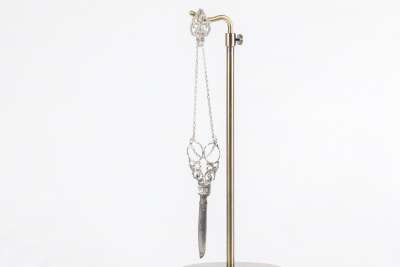
Chatelaine Scissors
$0.00 -

Needle Case
$0.00 -

Chatelaine
$0.00 -
Pincushion
$0.00