


Stylised Sea Lion Ceramic Figure Designed by John Skeaping (1901–1980) for Wedgwood
$975.00
1 Available
A stylised ceramic figure of a seal in a reclining pose, head turned upwards and to the left, modelled by John Skeaping (1901–1980) and produced by Wedgwood in Staffordshire. Dated to circa 1930, the figure is formed on an integral flat rocky base and finished in a uniform off-white cream glaze described as creamware. The modelling is simplified: fins, haunches and facial features are reduced to planar forms rather than naturalistic detail, consistent with interwar modernist tendencies. The glazed surface shows fine, even craquelure. The base carries an impressed mark reading ‘SKEAPING’ and ‘WEDGWOOD’ and a paper Wedgwood label is visible inside the hollow base, confirming designer and manufacturer.
Condition Report
The piece presents as a glazed, hollow earthenware figure with stable surface condition. Photographs and inspection show no obvious chips or through-cracks in the glazed body or along the casting seams. The glaze has an even coverage and displays fine, age-consistent craquelure across the surface. The underside and the rim of the base show typical kiln-related irregularities and light handling wear where the glaze is thinner; these do not interrupt the form. Inside the hollow base there is a small vent or casting hole consistent with moulded production; the paper Wedgwood label remains intact on the interior wall. The impressed maker’s marks on the base are clear. No active deterioration such as flaking glaze or moisture staining is evident in the images provided.
Dimensions
Weight: 1450gm, Length: 21cm, Width: 13 cm, Height: 20.5cm.
A Table Ornament to Impress Guests
This figure was intended as a domestic decorative object for display on a mantel, sideboard or shelf. During the interwar period such animal figures were marketed to furnish modern interiors and were sold through department stores and galleries as individual decorative sculptures. The scale, hollow construction and integral base indicate it was designed as a standalone display piece rather than as a functional vessel. The compact footprint and muted glaze made it suitable for coordinated display with other ceramic wares of the period.
Interwar Modernist Design
The form reflects principles associated with early 20th-century modernist sculpture, where essential form is prioritised over detailed naturalism. The simplification of anatomy into smooth, planar surfaces and the restrained modelling of limbs and features align with contemporaneous tendencies in British studio pottery and industrial design. The pose — recumbent, with a lifted head — reads as a studied composition rather than a literal portrait of an animal. The uniform cream glaze reduces surface distraction and emphasises the object’s volumes and silhouette, a characteristic approach in decorative sculpture of the 1930s.
Glazed Earthenware and Casting Technique
The object is glazed earthenware, likely produced from a press or slip cast in a two-part mould to form a hollow shell. The hollow interior and the small hole visible in photographs are consistent with slip-casting or with the use of a core in press-moulding to allow gases to escape and to control wall thickness. The even cream glaze was applied across the form and fired to produce the fine network of craquelure now visible; this pattern develops in glazes over time and with thermal variation. The base shows kiln surface irregularities where the piece rested during firing and evidence of trimming where the mould joins were finished.
Crafted by John Skeaping for Wedgwood
John Skeaping (1901–1980) was a British sculptor noted for his animal studies. He trained at the Royal College of Art and exhibited at the Royal Academy. Skeaping’s collaboration with Wedgwood began in the mid-1930s, producing a series of animal models in glazed earthenware and basalt ware. The impressed inscription ‘SKEAPING’ alongside ‘WEDGWOOD’ on the base identifies both the designer and the manufacturer. Production by Wedgwood in Staffordshire places the object within an industrial studio context in which artists’ models were translated into ceramic production for retail markets.
Collected by Enthusiasts of Interwar British Ceramics
Collectors of 20th-century British ceramics value works that document collaborations between artists and manufacturers, and pieces that illustrate the crossover between studio practice and industrial production. Skeaping figures for Wedgwood sit within this category: they are recorded examples of a sculptor’s designs realised by a prominent Staffordshire manufactory. The combination of maker’s marks, identifiable designer attribution and period stylistic characteristics make such objects of interest to those studying interwar ceramics, design history and the commercial dissemination of modernist sculpture into domestic contexts.
Related products
-
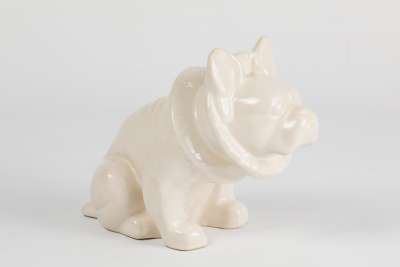
Craquelé Bulldog
$0.00 -
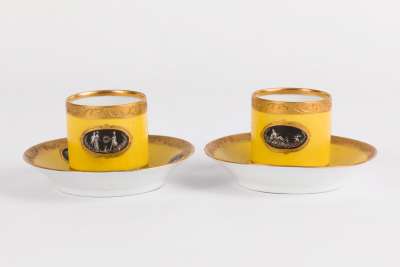
Demitasse Cup & Saucers
$0.00 -
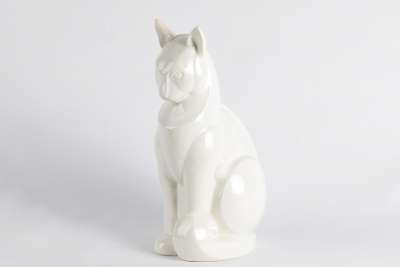
White Craquelé Cat
$0.00 -

Adnet Mandarin Duck
$0.00 -

Antique Coalport Spaniel Dish, English Regency Porcelain, c. 1800-1805
$0.00 -
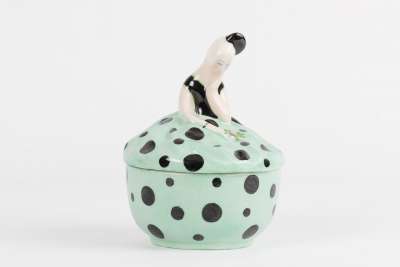
Robj Powder Box
$0.00 -
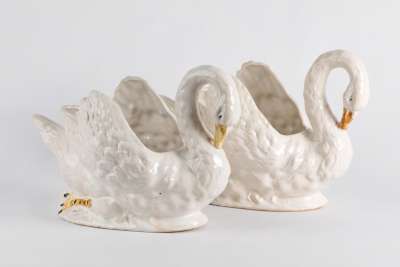
Ceramic Swan Planters
$0.00 -
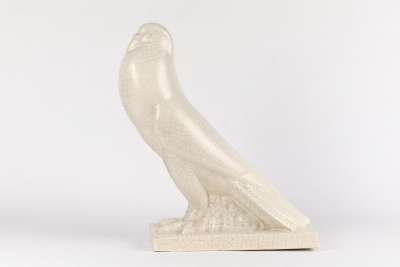
French Art Deco Craquele Pigeon
$0.00 -

Staffordshire Spill Vase Figures
$0.00 -
Royal Copenhagen Figurine of a Pointer Puppy
$0.00 -
Royal Copenhagen Figurine of a Stag
$295.00 -
Danseuses (Dancers)
$0.00