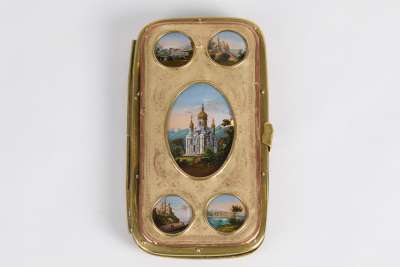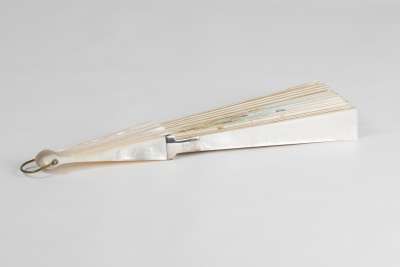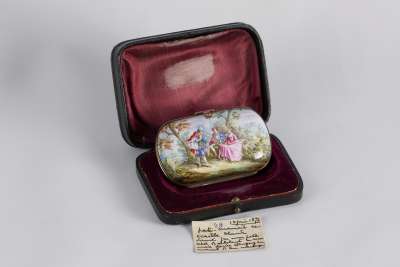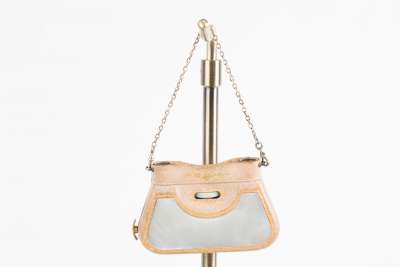
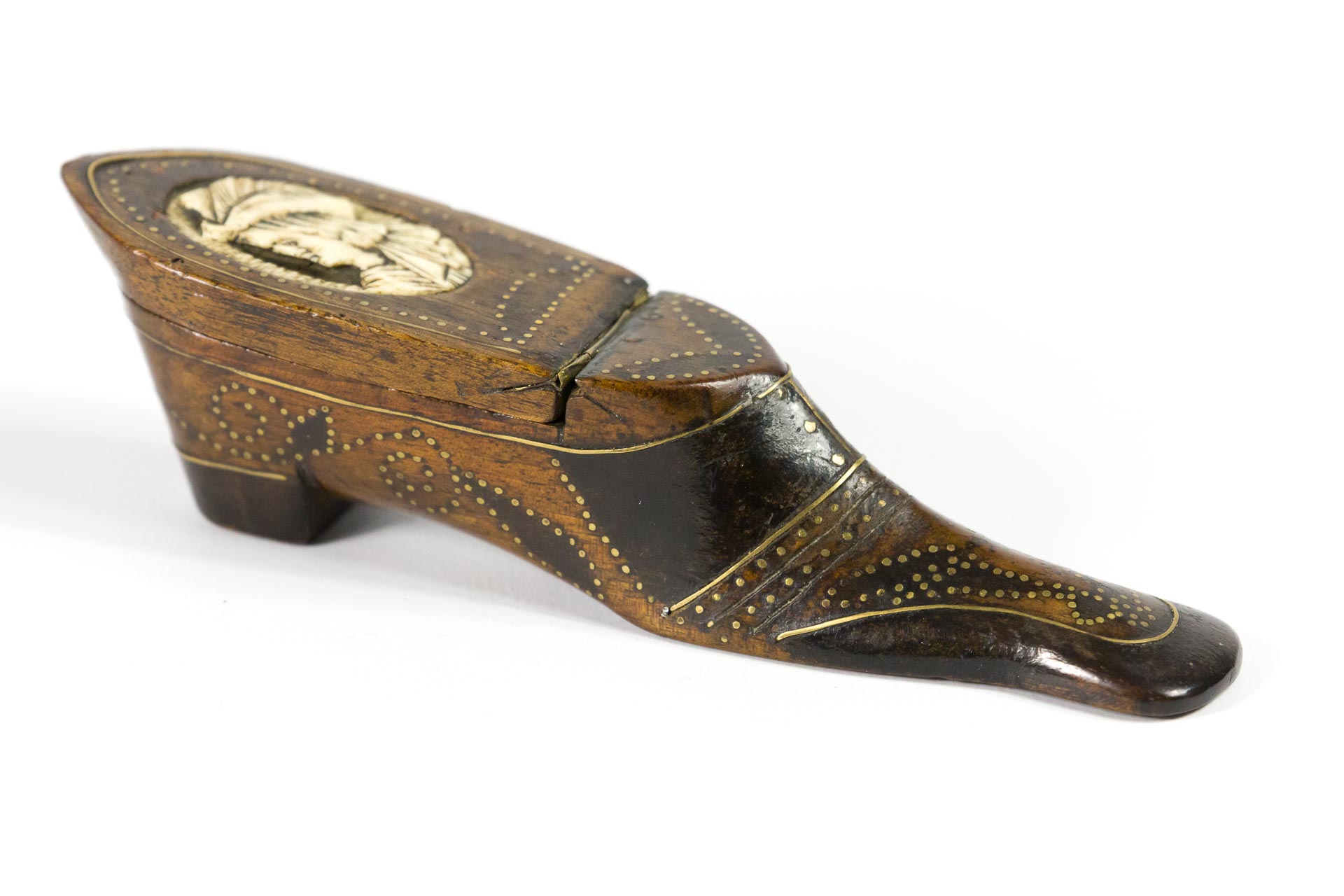
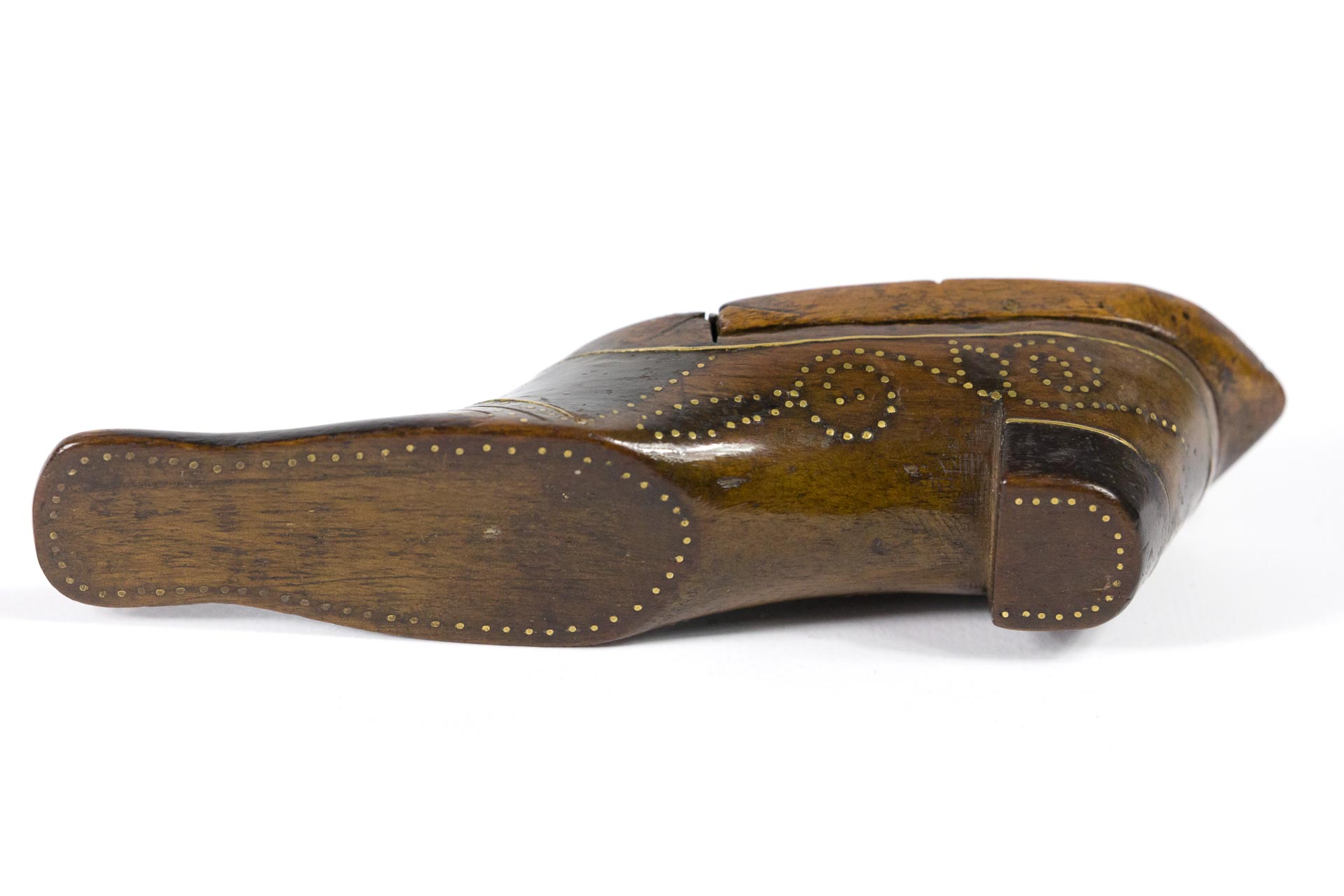
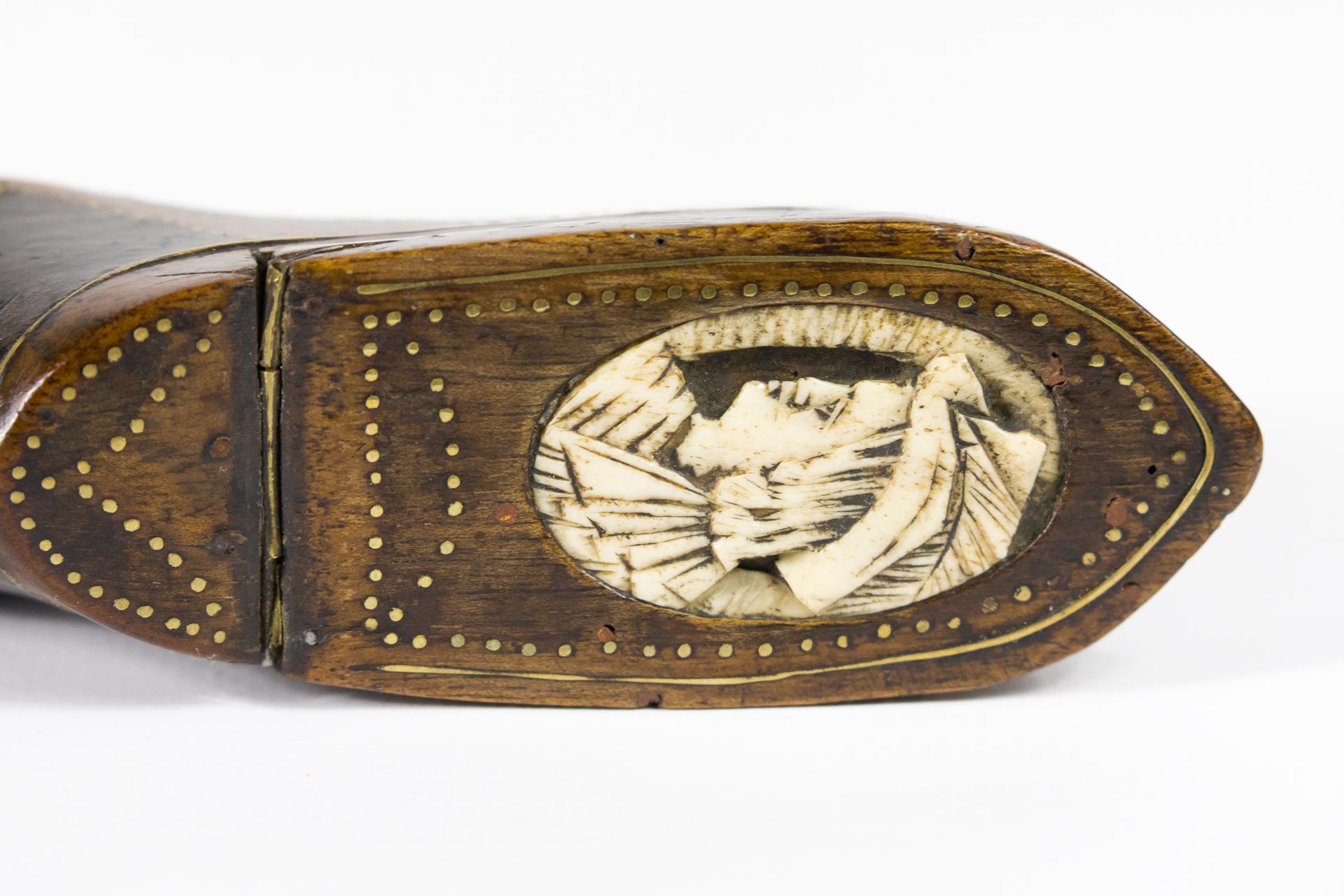
This antique French snuff box, dating from circa 1780-1790, is a finely carved wooden piece in the shape of a shoe, distinguished by its intricate inlaid brass decoration. It features a bone profile portrait delicately set into the hinged lid, adding a unique touch to its design. Crafted during an era when such items were both practical and ornamental, this snuff box is a testament to the craftsmanship of the period. Originating from France, it represents the fusion of artistry and functionality typical of late 18th-century decorative arts.
Condition Report
This snuff box is in good condition, exhibiting minimal wear that corresponds with its age and historical use. The brass inlays remain intact, maintaining their original lustre, while the wooden surface shows only minor signs of handling, preserving its smooth finish. The bone profile portrait on the lid is well-preserved, with no significant damage or fading, indicative of careful preservation over the centuries. The hinged lid functions smoothly, a testament to the quality of its original construction. Overall, the piece reflects the expected patina and wear of an item of this era, enhancing its authenticity and historical value.
Dimensions
Weight: 60gm, Length: 16cm, Width: 3.7cm, Height: 3.5cm.
A Personal Accessory for the Elite
Snuff boxes like this one were personal accessories in the late 18th century, used primarily by the elite to store and carry snuff, a form of powdered tobacco. These boxes were often carried in pockets and served as a symbol of status and refinement. The intricate design and craftsmanship of this piece suggest it was intended for someone of significant social standing. The shoe shape adds a whimsical element, reflecting the fashion and cultural nuances of the time, while the bone portrait indicates a personal connection, possibly a likeness of the owner or a loved one.
Fine Example of 18th Century Decorative Arts
This snuff box exemplifies the 18th-century European decorative arts style, characterized by its blend of practicality and embellishment. During this period, artisans often combined various materials to create visually striking yet functional objects. The use of brass inlay alongside carved wood and bone denotes an attention to detail and an appreciation for contrasting textures and colours. This approach was typical of the period, where even everyday objects like snuff boxes were crafted with aesthetic considerations in mind, reflecting the broader artistic movements of the time.
The Art of Wood Carving and Inlay
The creation of this snuff box involved skilled wood carving, a craft highly regarded in the 18th century for its ability to transform natural materials into intricate designs. The addition of brass inlay required precision and expertise, as artisans meticulously embedded the metal into the wood to form decorative patterns. The inclusion of a bone profile portrait further showcases the diverse techniques employed by craftsmen of the era. Such pieces were often custom-made, reflecting the owner's personal taste and the artisan's capability to integrate various materials harmoniously.
Crafted by a Master Artisan
While the specific maker of this snuff box remains unidentified, its quality suggests it was crafted by a skilled artisan familiar with the fashionable trends of the time. French artisans were renowned for their ability to produce intricate, high-quality decorative objects, often commissioned by affluent patrons. This snuff box, with its detailed carving and inlay work, would have required a high level of craftsmanship and knowledge of materials, indicative of an experienced maker working in a well-established workshop.
Collected by Enthusiasts of 18th Century Artefacts
Antiques such as this snuff box are highly sought after by collectors interested in 18th-century artefacts, particularly those focused on personal accessories and decorative arts. Collectors appreciate the historical significance, craftsmanship, and aesthetic appeal of these items, often seeking pieces with unique features such as unusual shapes or personalised embellishments. The combination of materials and the historical context of its use add to its desirability, making it a valuable addition to any collection focused on this intriguing period of European history.